
Loading

Power Electronics Lab |
|||
Total No. of Experiments available in PE LAB: 16 Experiments required as per JNTUK curriculum: 10 Equipments
|
|||
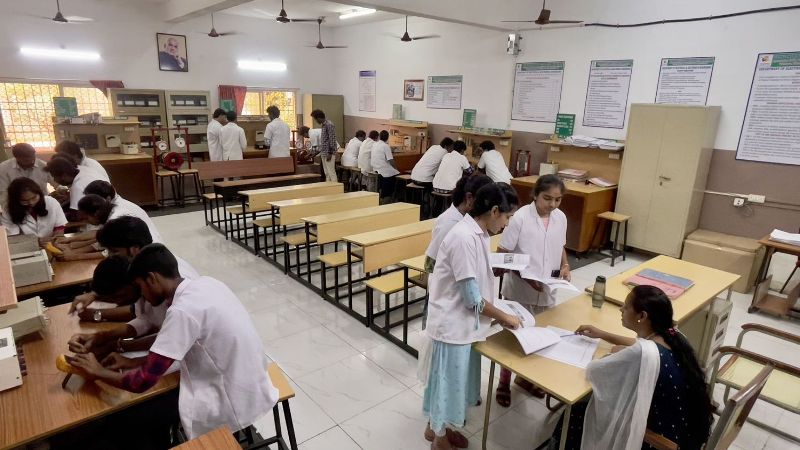 The Network Analysis and Electrical Technology Laboratory is designed to provide students with practical exposure to fundamental electrical and network concepts. This lab facilitates hands-on learning of various electrical circuit theorems, resonance phenomena, and two-port network parameters. Additionally, students gain experience in analyzing and controlling electrical machines, which is essential for real-world applications in electrical engineering
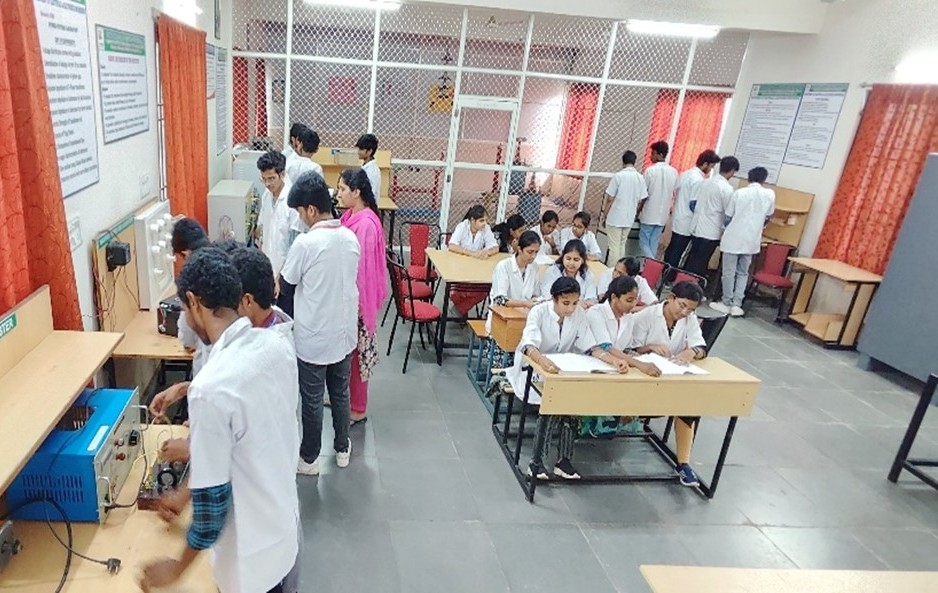 The Power Systems Laboratory is a state-of-the-art facility designed for advanced research and experimentation in high voltage engineering, fault analysis, and electrical power systems. The lab is equipped with cutting-edge equipment to support both academic learning and industry-oriented research.
Key Features:
100 kV High Voltage Setup – Enables high voltage testing and insulation performance analysis.
Fault Analysis of Alternators and Transformers - Study of symmetrical and unsymmetrical faults to understand system behavior and protection mechanisms.
High Voltage Engineering Experiments - Testing of dielectric materials, breakdown voltage studies, and partial discharge analysis.
This lab serves as a hands-on training ground for students, researchers, and professionals, bridging the gap between theoretical knowledge and practical applications in power system engineering.
The Power Systems Laboratory is a state-of-the-art facility designed for advanced research and experimentation in high voltage engineering, fault analysis, and electrical power systems. The lab is equipped with cutting-edge equipment to support both academic learning and industry-oriented research.
Key Features:
100 kV High Voltage Setup – Enables high voltage testing and insulation performance analysis.
Fault Analysis of Alternators and Transformers - Study of symmetrical and unsymmetrical faults to understand system behavior and protection mechanisms.
High Voltage Engineering Experiments - Testing of dielectric materials, breakdown voltage studies, and partial discharge analysis.
This lab serves as a hands-on training ground for students, researchers, and professionals, bridging the gap between theoretical knowledge and practical applications in power system engineering.
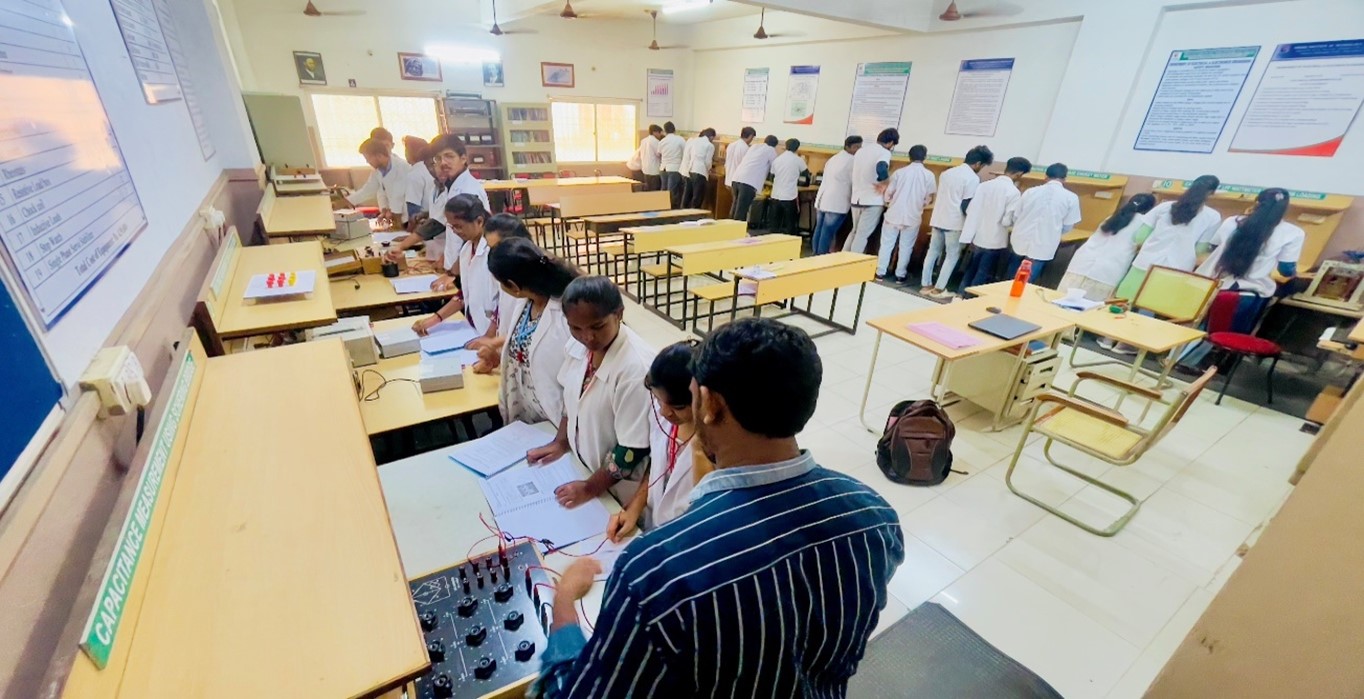 Measuring Equipment is the Back-Bone of Electrical Engineering. In this lab, the equipment provides an opportunity to the students to connect, study and calibrate different electrical measuring equipment like Ammeter, Voltmeter, Wattmeter, Energy Meter, Power Factor Meter, Frequency Meter, Earth resistance meter are performed. This Lab helps the students to have a basic idea how the measuring equipment is working/manufactured/calibrated in Electrical / Electronic Field.
| Schering Bridge with Accessories | 2 |
| Anderson Bridge | 2 |
| Crompton DC Potentio Meter | 2 |
| Kelvin Double Bridge | 2 |
| Strain Gauge | 2 |
| Oil Testing kit | 1 |
| Phase Shifting Transformer | 1 |
| 1-Phase Auto Transformer | 4 |
| Resistive Load box | 2 |
| Chock coil | 1 |
| Inductive Loads | 2 |
| Single Phase Servo Stabilizer | 1 |
| Regulated Power Supply | 3 |
| Wheatstone Bridge | 1 |
| Earth Tester | 1 |
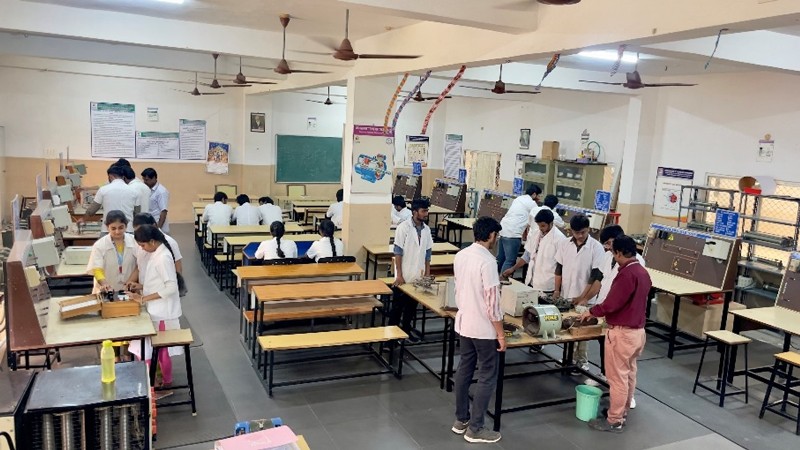 The Department has a deep-rooted state of art and advanced Electrical Machines lab. The equipment provides an opportunity to the students to connect and operate the machines with their own hands to find all the characteristics of the different DC Machines which are recurrently used in Industries. This helps them to have a ample picture of utilization of electric power in different industries.
| DC Shunt Motors with Brake Drum Arrangement | 6 |
| DC Shunt Generator Coupled with DC Shunt Motor | 6 |
| AC & DC Distribution Panel | 1 |
| 3 Phase Air Cooled Rectifier (100A) | 1 |
| Resistive Load Banks | 4 |
| Stabilizer 5 KVA | 1 |
| Megger | 1 |
| Regulated Power Supply | 3 |
| Wheatstone Bridge | 1 |
| Earth Tester | 1 |
| LCR Meter | 1 |
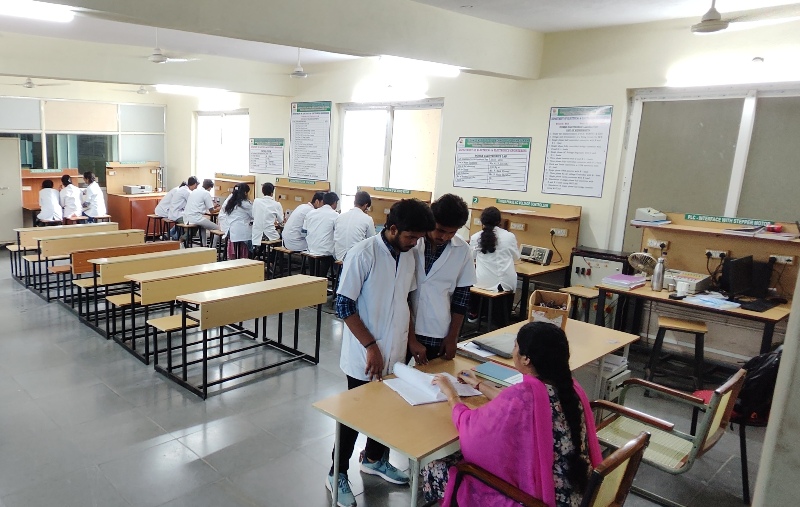 In this lab students undergo practical training using MATLAB over various physical systems/ transfer functions. Stability analysis is done using Bode Plot and Root Locus Techniques. Other equipment like AC Servomotors, DC Servomotors and Synchros are being utilized to observe the parameters physically. The demonstration kit to study control of AC load current having an electrical isolation with DC current (magnetic amplifier) is also available. Various circuits for compensations were designed and then included to the plant / system for obtaining stability.
| Characteristics of Synchros | 1 |
| Characteristics of Magnetic Amplifier | 1 |
| Programable Logic Control Trainer | 2 |
| Transfer Function Of DC Generator | 1 |
| Effect Of Feed Back On Dc Servo Motor | 1 |
| Time Response Of Second Order System | 2 |
| Transfer Function Of DC Motor | 2 |
| Temperature Controller Using PID | 1 |
| Effect of P PD PI PID Controllers on second order system | 1 |
| Characteristics of AC Servo Motor | 1 |
| Effect of Feed Back an Dc Servo Motor( using PID Controller) | 1 |
| Lag and Lead Compensation | 1 |
| Potentiometer as an error detector | 1 |
| Speed Torque characteristics of AC Servo Motor | 1 |
| Non Contact Tachometer | 3 |
| Function Generators SM 5071 | 3 |
| CROs 30MHZ, SM410 | 2 |
| Digital Multimetrs | 10 |
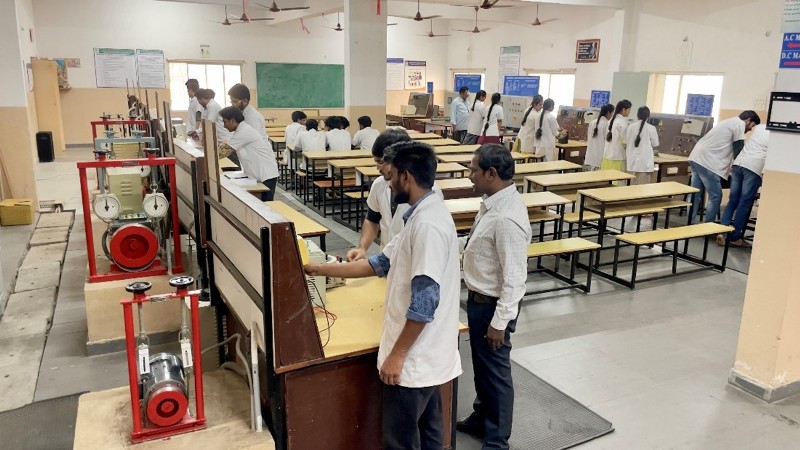 The Department has a state of art electrical AC Machines lab with all advanced machines & measuring devices. The equipment provides an opportunity to the students to connect and operate the machines with their own hands. Also they will observe and understand the characteristics of different types of Electrical Machines (AC), Parallel operation of Core type Transformers and Sailent & Non-Sailent type Alternators. This helps them to have a comprehensive picture and relevance of machines & transformers in Electrical / Electronic Field.
| 5 H.P D.C Dc Shunt Motor Coupled With 3 Phase 3.5 KVA Alternator | 1 |
| 3 Phase 5 HP Squirrel Cage Induction Motor With Loading Arrangement | 1 |
| Clamp Meter 1000A, Ac | 1 |
| 3 HP 415V Auto Synchronous Motor | 1 |
| 1HP,230v,1440 Rpm, 1 PH Induction Motor | 1 |
| 5 Hp,220v,1500 Rpm, Shunt Motor Coupled To 3 KVA Alternator | 1 |
| 5 Hp Slipring Motor With Accessories | 1 |
| 5HP DC SHUNT MOTOR CPUPLED TO 3KV ALTERNATOR SET | 1 |
| PHASE SEQUENCE MATER | 1 |
| FREQUENCY METER | 1 |
| 1phase 1HP SQUERAL CAGE INDUCTION MOTOR WITH BD ARRANGEMENT | 1 |
| 1HP BLDC MOTOR SPRING BALANCED LOAD STEUP WITH HALL SENSOR FOR CONDCUTING LOAD TEST a) BLDC Motor b) DspicIC 4011 based Inverter controller c)3phase Inverter Power circuit | 1 |
| 1H.P Switched Reluctance Motor, eddycurrent load setup with sensor for conducting load test a) 1H.P SR motor- Edyy current load setup with sensor b)dsPIC 30F4011 based Pwm controller(Micro-4011) c) SRM power Module | 1 |
| 5Hp/220V 1500 Rpm Dc shunt Motor with Flywheel Mounted on Shaft of Motor | 1 |
| Retardation test on Dc shunt Motor using PLC & Scada Control Panel | 1 |
| Regulation of 3phase Alternator by ZPF Method using PLC & Scada Control panel | 1 |
| 5HP /220V/1500Rpm/Shunt wound DC Motor Coupled to 3KVA /415V /3phase /1500Rpm /50Hz/4pole/Rotor wound/ stator excited/manually regulated salient pole Alternator with base & coupleings | 1 |
| Core I3-10th/4GB Ram/1TB hard disk/DOS/ 9F4DCD3, HLID4F3 CPU | 2 |
| Dell 20Inch LED Monitor E2016H, 9NG6NH3,99V6NH3 | 2 |
| HP Laser jet printer 126A, CNBRP995FD | 1 |
| 1 Ph Step Down Transformer 230/115V ,2KVA | 1 |
| Transformeres,230/115V, 2 KVA | 4 |
| Transformeres,230/115V, 1 KVA | 2 |
| Transformer,230/115V,(Scot Conection) | 2 |
| 3-Phase,10A, Capacitive Load Bank | 1 |
| 3-Phase, 20A Resistive Load Bank | 2 |
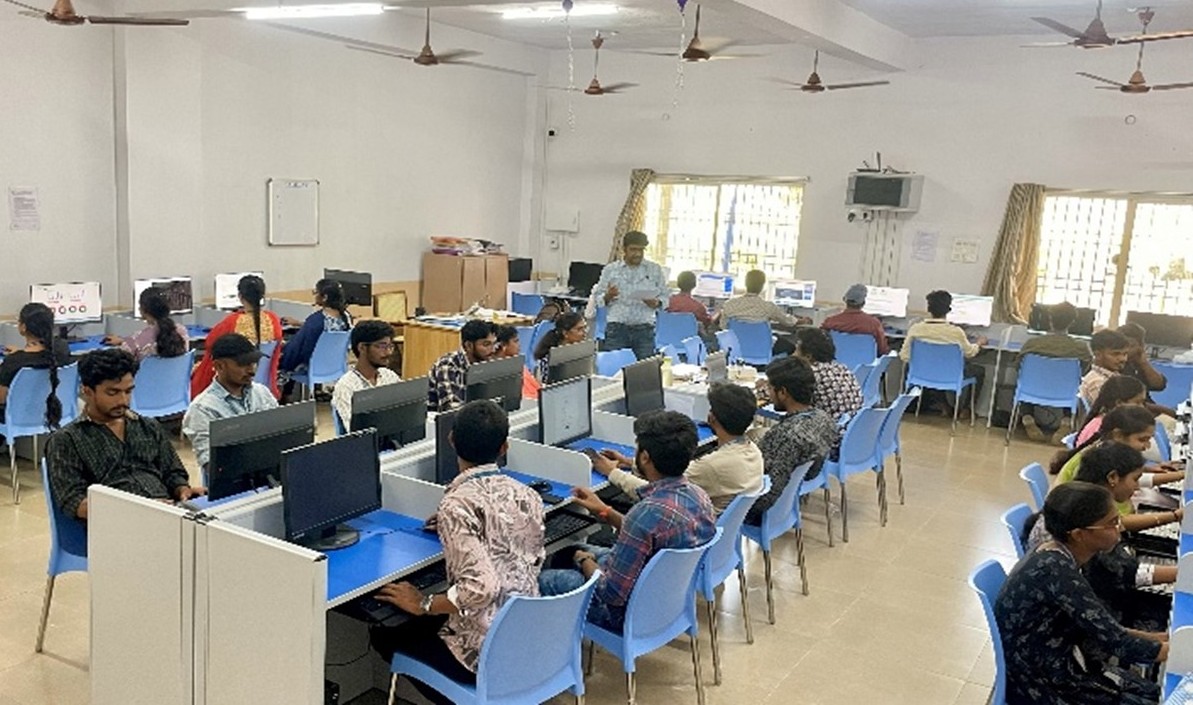 The EEE Computer Lab was established in 2024, primarily to provide a dedicated space for girl students from III year to practice Python, SQL, and C basics under the guidance of a mentor available daily. Additionally, II-year students can utilize the lab for the Data Structures Lab in II-I and the Python Lab in II-II, as per R23 regulations.III-year students can perform experiments related to the Design of Photovoltaic Solar Power Systems Lab.
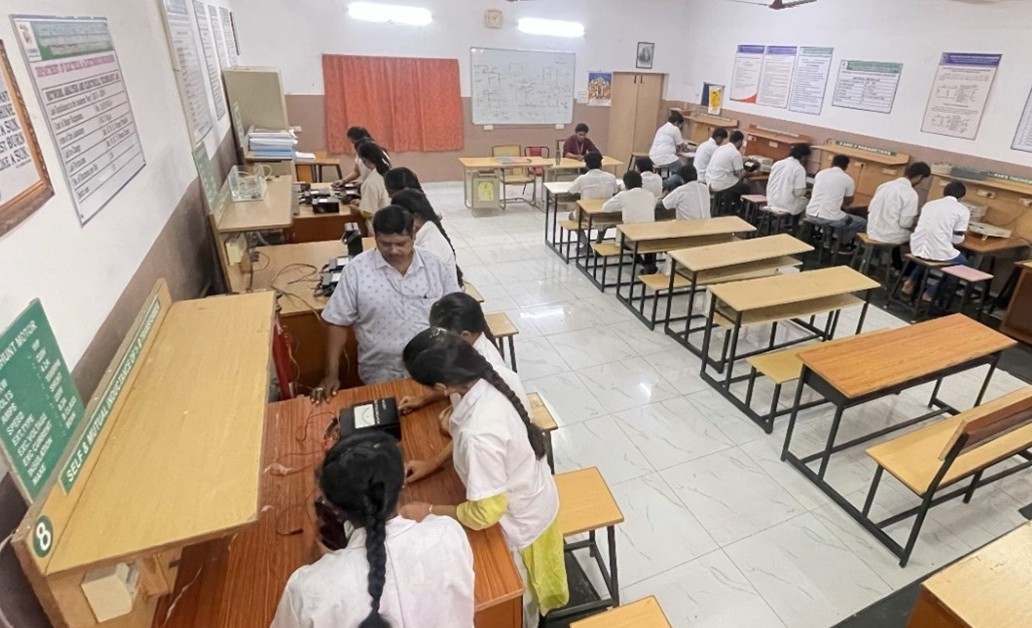 This lab is well provided with different equipment like Regulated Power Supplies, Function Generators, Digital Storage Oscilloscopes (DSO), Cathode Ray Oscilloscopes (CRO), Digital and Analog meters of a wide range and standing electric equipment. This lab gives practical observation of the different characteristics of Electrical / Electronic Elements when connected differently. This gives a good foundation on Electrical and Electronic components to the students in the initial years. And also provides verification of different theorem & networks practically.
| Regulated Power Supply | 12 |
| Function Generator10MHz | 2 |
| CRO 30 MHz | 2 |
| 1-Ph AutoTransformer | 1 |
| 1-Ph IsolationTransformer 2KVA | 1 |
| Servo Stabilizer 5KVA | 1 |
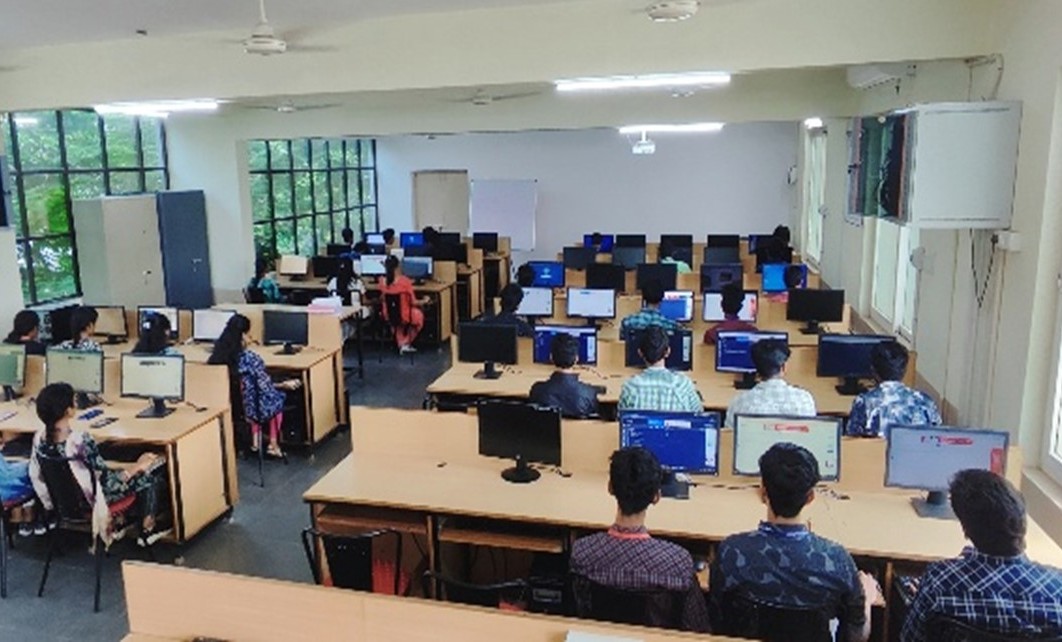 The lab is equipped with electrical system simulation software's like MATLAB/SIMULINK, PSPICE, and PSCAD. In MATLAB, various tool boxes like power system toolbox, Artificial Neural Networks tool box, Fuzzy Logic tool box and Control Systems toolbox etc., are available. With help of this software a complex electrical system can be analyzed for optimization in a cost effective manner.
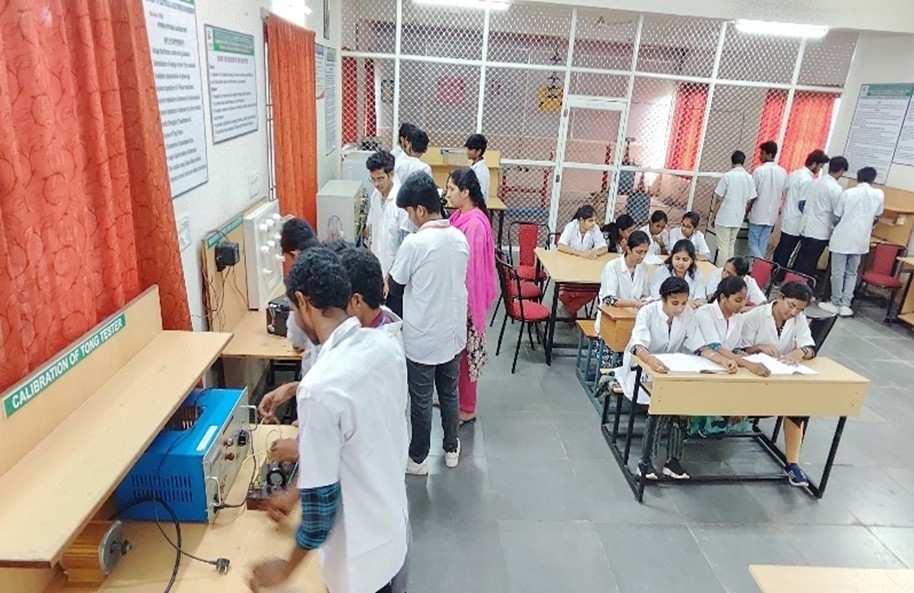 Power electronics is a subject that concerns the application of electronic principles in to situations that are rated at power level rather than signal level. It is important for student to understand the fundamental principles behind all these power electronics converters. In this Lab, characteristics of SCR, MOSFET, IGBT, Converters, Inverters and Choppers can be studied practically by using advanced Power Electronic Equipment like Cyclo-converters, Dual Converters, Jones Chopper, Commutation circuits, Series and Parallel Inverters.